Ask most people what makes dark chocolate taste dark and they will say one number: seventy. Seventy-two, eighty-five, sixty. The percentage tells you how much of the bar comes from the cacao bean — but it says nothing about which bean, from where, handled how.
That is where the real flavour lives. Cacao is an agricultural product, as expressive as wine or coffee. Beans from different origins carry different signatures — fruit, nut, spice, depth — shaped by soil and climate and fermentation. A single-origin 70% is not merely intense; it is specific. It tastes like a place.
“A percentage is a measurement. A flavour is a place.”
Roast is the second author. The same bean roasted to different curves yields completely different chocolate — one leaning to dried fruit and warmth, another to smoke and depth. We roast every origin to its own curve in-house, tasting as we go, chasing the roast that lets the bean speak most clearly.
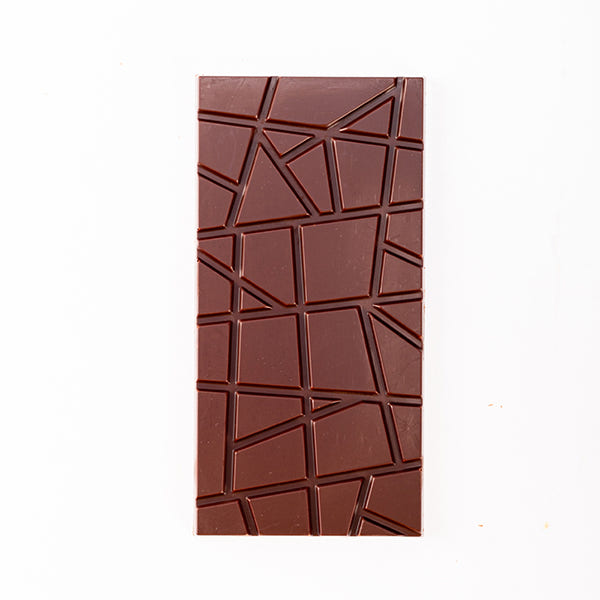
Then there is refinement. Stone-rolled for days, the particles in our chocolate become too small for the tongue to find — which is why a Mozimo bar reads as smoothness rather than grit, and why the flavours arrive in sequence instead of all at once.
So when a dark chocolate tastes flat and merely bitter, the problem is rarely the percentage. It is anonymity — beans blended into silence. Taste a single-origin bar the way you might taste a single-estate tea, and dark chocolate stops being an intensity test. It becomes a map.
taste the story